Unpacking how e-wallet verification delays intersect with responsible gambling self-exclusion tools on UK platforms hosting live blackjack tables
Drew Becker · Aug 24, 2026

Unpacking how e-wallet verification delays intersect with responsible gambling self-exclusion tools on UK platforms hosting live blackjack tables
UK platforms that host live blackjack tables rely on e-wallet systems for deposits and withdrawals, yet verification steps sometimes stretch across hours or days depending on the provider and the volume of checks required at any given moment. Self-exclusion tools sit alongside these payment flows as a mechanism that players activate to restrict access, and the timing of both processes can create points where a request meets an ongoing transaction status. Observers note that when verification lingers, the platform must still honor exclusion flags even while the payment layer remains in limbo, which means operators maintain separate databases that update exclusion status independently of wallet confirmations.
E-wallet verification flows on live dealer sites
Live blackjack sessions run in real time, so platforms integrate e-wallets that complete initial authorization quickly while full identity or source-of-funds reviews may continue in the background. August 2026 saw several providers roll out enhanced automated screening that flags higher-risk transactions for manual review, which lengthens the window before funds clear fully. Those who study payment integration report that this staged approach keeps tables running without interruption for most users, but it also means a player who initiates self-exclusion during an active session may see their account locked even if a pending deposit has not yet settled.
Mechanics of self-exclusion tools
Self-exclusion registers a player’s details across participating sites and blocks new account creation or login attempts for the chosen period. Platforms update these registers through secure feeds that operate on set intervals, often every few minutes, so the exclusion takes effect rapidly once submitted. Research from the Responsible Gambling Council indicates that the technical separation between payment verification modules and exclusion registries helps prevent gaps, yet any lag in the payment side can still leave temporary visibility of account balances while the exclusion processes.
Where delays meet exclusion requests
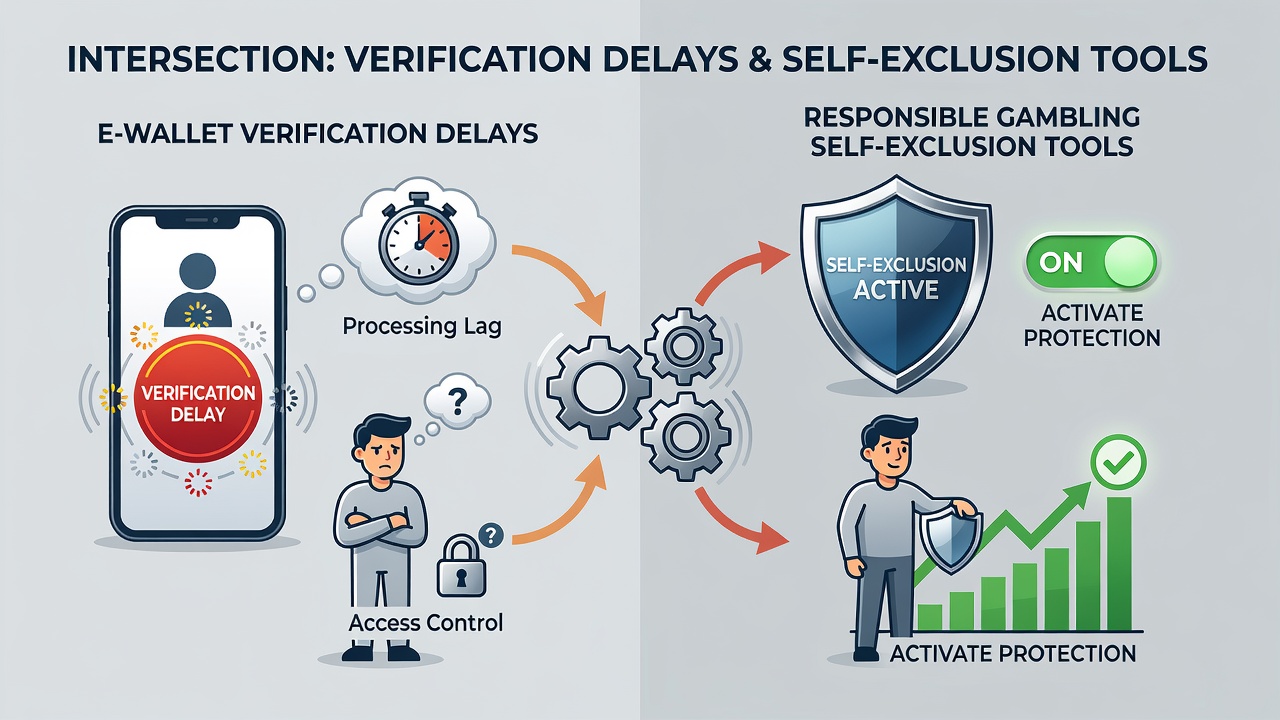
When a player attempts to self-exclude while an e-wallet verification remains incomplete, the platform first freezes login credentials and suspends gameplay, then queues the verification for cancellation or refund once identity checks finish. This sequence keeps the exclusion intact without requiring the wallet process to conclude first. Data shared by payment gateway analysts shows that most UK operators handle these overlaps through automated scripts that prioritize exclusion commands over pending transaction approvals, reducing the chance that funds reach the table during the restricted window. One study revealed that coordination between these systems improved noticeably after 2025 protocol updates, with fewer instances of partial access reported across monitored sites.
Regulatory context and platform practices in 2026
Standards set by multiple oversight bodies emphasize that exclusion tools must function regardless of payment status, and August 2026 brought fresh guidance encouraging operators to test these intersections during routine audits. Platforms hosting live blackjack tables now document every case where verification timing overlaps with an exclusion request, creating records that auditors review for compliance. Figures from industry reports highlight that such documentation has helped identify patterns, including peak times when verification queues grow longer and coincide with higher exclusion volumes. Those patterns prompt some providers to allocate extra staff during evenings when live tables see heaviest traffic, ensuring that exclusion flags receive immediate attention even if wallet reviews stretch out.
Practical examples from operator reports
Take one platform that published aggregated statistics showing a small percentage of exclusion requests arrived while e-wallet checks were underway, and in each instance the account locked within minutes while the pending deposit reversed automatically once verification completed. Another case involved a player who had multiple e-wallets linked, so one verification cleared while another lagged; the exclusion system still blocked access across all linked methods because the registry operates at the account level rather than the transaction level. Observers note these examples demonstrate how platforms prioritize the exclusion registry over payment finality, which aligns with requirements that responsible gambling measures take precedence.
Conclusion
Coordination between e-wallet verification and self-exclusion continues to evolve on UK live blackjack platforms as operators refine their internal processes and adopt updated technical standards. The separation of these systems allows exclusions to activate promptly even when payment reviews extend, and records from 2026 indicate steady improvement in handling overlaps without compromising either function. Continued monitoring and cross-industry data sharing support consistent application of these safeguards across the sector.